Tito Designori
The Glass Bead GameTito Designori is Plinio Designori’s gifted, pampered son, whose early allegiance to his mother complicates his father’s authority and whose tutorship under Joseph Knecht brings his unsettled character briefly into focus. At Belpunt, the pupil’s exuberant dawn dance reveals a solemn, pagan intensity beneath his youthful bravado; after Knecht drowns in the lake, Tito’s conviction that he is guilty transforms that loss into a moral turning point.
Identity and Family Background
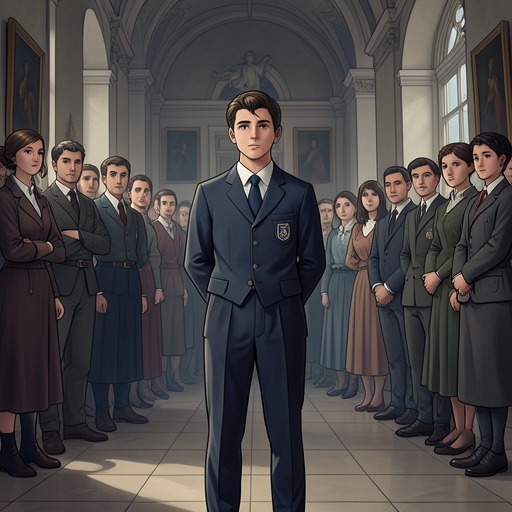
Tito grows up at the center of an intense contest for affection. Both parents lavish love on him, and he becomes increasingly his mother’s partisan. Plinio experiences this as the bitterest of his losses, though it does not break him: he learns to bear it with a grave, worn dignity. Tito’s privileged place in the household is not simply bestowed by one parent; it has been reinforced by the courtship and jealousy between both, leaving his father’s authority gradually stripped away.
The boy’s home reflects the family’s uneasy balance. When Knecht first visits, he finds Tito’s mother reserved and intelligent, but apparently dominated within the household by her handsome, cheeky son. The mother and son are initially cool toward Castalia, and Tito seems accustomed to the tension between his parents. Plinio continues to seek his son’s companionship; Tito sometimes accepts these overtures for selfish reasons and sometimes rebuffs them impudently. His confidence therefore carries a defensive edge: he enjoys his favored position even as the household’s strained courtesies expose the conflict beneath it.
Tito also gives that conflict a family history. On a walk through the old part of the capital, he points out the Designori arms above the entrance to the family’s former townhouse, which belonged to the family for three hundred years. He contrasts that ancestral house with the family’s newer, commonplace home, blaming his father for selling the old mansion after the grandfather’s death in order to build a fashionable house. The complaint reveals Tito’s attachment to inherited status and his tendency to judge his father through a sharp, dismissive account of the past.
The Tutorship and Its Beginnings
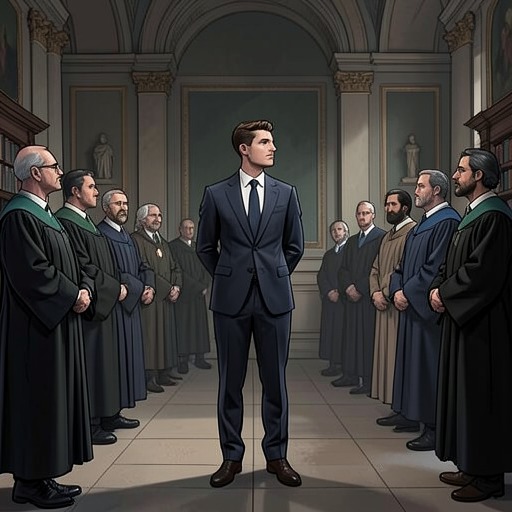
As Plinio begins to recover through Knecht’s friendship, he asks the Magister to take Tito in hand. The boy is having difficulties at school, Plinio explains, and has become spoiled and impudent; his mother’s influence has further diminished whatever authority his father once possessed. Plinio’s request is both a hope for his son and a means of repairing their relationship. Knecht welcomes the proposal, but insists that Tito’s parents must agree to leave the boy entirely in his care for a time, excluding the daily influence of home. He believes Tito has strong gifts from both parents, but lacks harmony among them; his task, as he describes it, is to awaken and strengthen the boy’s desire for that harmony.
Knecht’s visits help secure the arrangement. Tito’s mother gradually comes to trust the Magister and consents to the plan. Tito, meanwhile, asserts his wish to be addressed formally, rather than with the familiar pronoun used for a child. Knecht accepts the request courteously, explaining that teachers in his Province use the familiar form with all students, even adults. The exchange registers both Tito’s insistence on being treated as grown and Knecht’s refusal to turn the matter into a contest of authority.
A quieter encounter gives Tito a first glimpse of what the tutor’s authority means beyond office and reputation. He comes upon Knecht sitting in meditation, so still and composed that he instinctively checks his stride and begins to tiptoe away. Knecht greets him, then sits at the piano and plays an andante movement by Scarlatti, recently used as the basis for a Glass Bead Game exercise. He explains how the music can be analyzed and translated into the Game’s hieroglyphs. For the first time, Tito sees not merely a celebrated Castalian visitor or a threat to his self-esteem, but a practitioner at work: a man with a subtle, exacting art that seems to call for complete devotion. Being treated as intelligent enough to follow the explanation gives Tito confidence, and he begins to sense the sources of Knecht’s cheerfulness and unruffled calm.
Belpunt: Independence and Recognition
After Knecht leaves Castalia and arrives in the capital to take up his new position, the family plans to send tutor and pupil to Belpunt, its mountain cottage beside a lake. The first arrangement is threatened when Tito disappears on the day Knecht arrives. His mother reports that he has been gone since early morning, and Plinio is thrown into alarm. Knecht steadies his friend with rhythmic breathing exercises, then finds a note in Tito’s room: the boy has set out alone for the mountains and will wait at Belpunt. He hopes his parents will forgive this last excursion before his freedom is restricted again, and dislikes the prospect of making the journey under his teacher’s supervision.
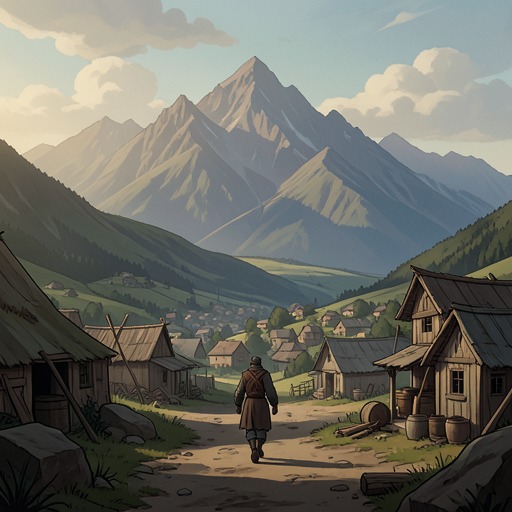
Tito’s departure is an assertion of independence, but it does not amount to a rejection of Knecht. When the Magister reaches the secluded cottage after a journey from the capital into the high mountains, Tito is waiting at the open door. He is friendly and slightly embarrassed, apologizes for having let Knecht travel alone, and trusts that the tutor understood his feelings; he has already let his father know that he arrived safely. The welcome resolves the immediate anxiety and reveals that Tito’s wish for freedom can coexist with a willingness to begin the tutorship on his own terms.
The landscape becomes the setting for a more intimate education. Tito is an early riser who runs, wrestles, and hikes, and he refuses wine in reaction to his father’s comfort-loving habits. Knecht recognizes a tendency toward the pose of an anti-intellectual child of nature, but welcomes Tito’s athletic interests as one way to win his confidence, while believing that music will lead them further. He does not need to match the boy’s physical feats; participation is enough to show that he is neither cowardly nor merely bookish.
At dawn by the lake, Tito’s physical confidence becomes something more than sport. As the sun appears over the mountain ridge and light reaches the shore, he stretches rhythmically and breaks into an enthusiastic dance. His movements turn toward the sun and retreat from it; he opens his arms to the mountain, lake, and sky, kneels toward the earth, and extends his hands toward the water. He offers his youth, freedom, and sense of life to the powers in a ceremony marked by solemnity as much as exuberance. Knecht, watching, sees the moody and immature boy momentarily elevated into a figure of priestly gravity. The dance discloses gifts and tendencies that ordinary conversation and youthful posturing had concealed, while also making Tito seem harder, more remote from culture, and more pagan than Knecht had thought.
Knecht’s Death and Tito’s Guilt
The tutorship ends almost as soon as it has begun. Knecht, who has already felt exhausted and physically unwell, follows Tito into the glacial lake. He believes he is swimming after the boy and striving for his respect and companionship, but the water overwhelms him; his struggle becomes a fight for his life. Tito swims ahead, looks back, and is at first satisfied to see the Magister following. When he looks again and Knecht is gone, he becomes uneasy, calls, turns back, and searches by swimming and diving until the cold forces him ashore.
On land, Tito finds Knecht’s dressing gown and rubs his numb limbs until they begin to warm. The lake, moments before a place of morning freedom, now seems empty, alien, and evil. As the shock recedes, he understands that something terrible has happened. His grief hardens into self-accusation: he thinks he is guilty of Knecht’s death. Only after there is no longer any need to preserve his pride or resist the tutor does Tito feel how dear Knecht has become to him. The loss thus exposes the affection that had grown beneath his earlier wariness and defiance.
Tito also understands his guilt as a force that will reach beyond the immediate accident. Despite rational objections, he feels responsible, and the feeling comes with an apprehension that it will change both him and his life, demanding more of him than he has previously demanded of himself. The story does not show the later course of that change. It leaves Tito at the moment when grief has become an obligation: the boy who had feared losing his freedom now faces a loss that cannot be undone and a moral burden he believes he must answer.
Narrative Significance
Tito’s brief arc brings the novel’s contrast between Castalian discipline and life in the wider world into the intimate setting of a father, son, and tutor. Knecht approaches him not as a problem to be subdued but as a young person whose gifts need integration. Music offers one path toward that harmony; athletic companionship and the planned isolation at Belpunt offer others. Tito’s response is uneven—he tests authority, seeks freedom, and protects his pride—but his attention to Knecht’s meditation and musical demonstration shows that he can be reached by example as well as instruction.
The dawn dance concentrates the promise and the danger in that education. Tito’s body expresses a deep response to sun, mountain, earth, and water before he can explain it; Knecht sees in the performance both exceptional vitality and a remoteness from cultivated life. The same scene that makes the pupil appear most fully himself precedes the lake’s fatal reversal. Tito survives, but his new independence is inseparable from bereavement and imagined responsibility. Knecht’s death leaves the tutorship unfinished, while Tito’s guilt signals that its influence may continue as a demand for self-transformation rather than as a completed course of instruction.